Remote Patient Monitoring
remote patient monitoring AI
remote patient monitoring software
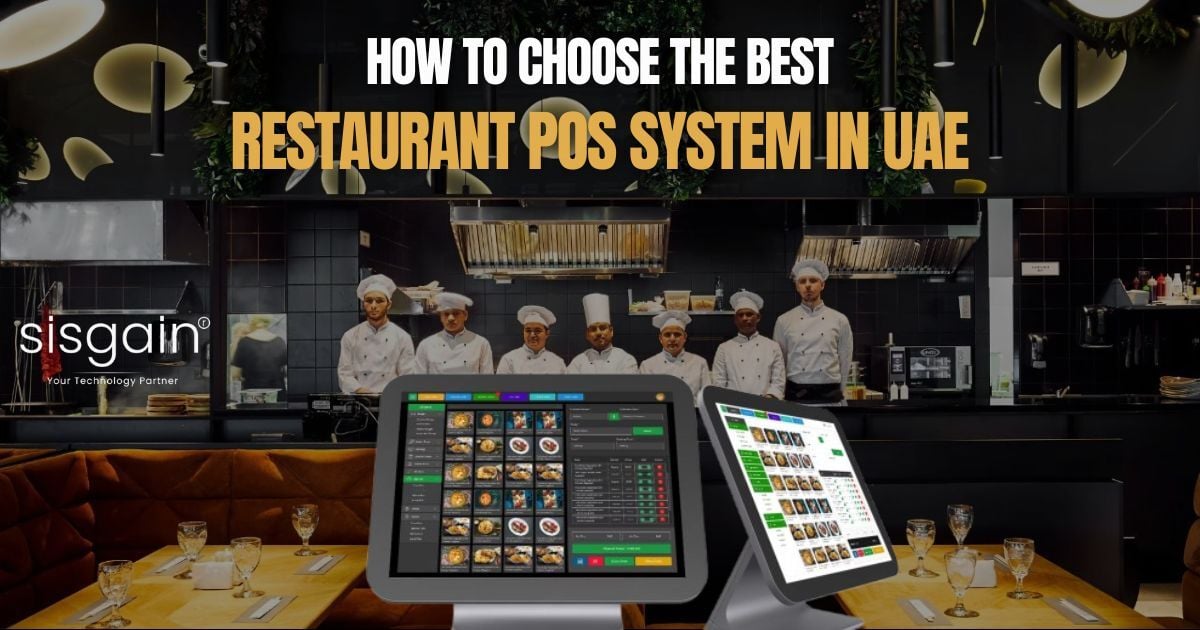

Running a successful restaurant in the UAE is no longer just about great food and ambience. In today’s competitive market, speed, accuracy, customer experience, and data-driven decisions matter more than ever. This is where restaurant point of sale software and modern restaurant software play a critical role.
According to industry reports, restaurants using advanced POS systems experience 20–30% faster order processing and significantly fewer billing errors. In cities like Dubai and Abu Dhabi—where customer expectations are high and competition is fierce—choosing the right POS system can directly impact your revenue, customer retention, and operational efficiency.
This comprehensive guide will help you understand how to choose the best restaurant POS system in UAE, what features to look for, what mistakes to avoid, and how to make an informed decision that supports long-term growth.
A restaurant POS system is much more than a billing machine. It is the central nervous system of your restaurant operations, connecting orders, payments, inventory, staff, and customer data in one platform.
Modern restaurant POS systems include:
In the UAE, restaurants often deal with high order volumes, multilingual staff, multiple revenue channels, and VAT compliance. A POS system ensures everything runs smoothly and consistently. Instead of managing separate tools for billing, inventory, and reporting, a POS system integrates everything into a single, easy-to-use interface.
Choosing the right POS is not about buying software—it’s about building a foundation for scalable restaurant operations.
The UAE restaurant industry is unique. From luxury fine-dining restaurants in Dubai to fast-growing cloud kitchens and food trucks, businesses operate in a highly regulated and customer-centric environment.
A poor POS choice can lead to:
On the other hand, the right POS system helps:
In a region where speed, service quality, and digital payments are expected, selecting the right POS system is not optional—it is essential for survival and growth.
Not all POS systems are designed for the UAE’s fast-paced and highly regulated restaurant industry. Restaurants here must manage high customer volumes, strict tax regulations, multilingual staff, and multiple sales channels. A POS system must align with these operational and legal requirements to ensure smooth daily operations and long-term compliance.
VAT compliance is mandatory in the UAE. Your POS system must:
Manual VAT handling increases the risk of errors and penalties. A UAE-ready POS system ensures compliance without additional effort.
The UAE workforce and customer base are highly diverse. A POS system should support:
This improves usability for staff and enhances customer convenience.
Online food delivery is booming in the UAE. Your POS system should integrate with platforms like:
This prevents order duplication and reduces manual entry errors.
A restaurant POS system should simplify operations, improve efficiency, and support business growth. The right system streamlines order processing, inventory tracking, kitchen communication, and reporting. Choosing a POS with essential features ensures smoother workflows, better customer service, and improved profitability across all restaurant operations. Below are the most important features to consider.
Order management is the core function of any POS system. A good system allows:
Fast and accurate billing improves customer satisfaction and speeds up table turnover, especially during peak hours.
Inventory control is one of the biggest challenges for restaurants. A modern POS system helps:
With accurate inventory data, restaurant owners can control costs and avoid over-ordering.
A Kitchen Display System replaces printed kitchen tickets with digital screens. It:
This is especially useful for high-volume restaurants and cloud kitchens.
Choosing between cloud-based and on-premise POS systems is a critical decision for restaurant owners. Cloud-based systems offer remote access, automatic updates, and easy scalability, while on-premise systems provide local data storage. In the UAE, cloud POS solutions are often preferred for their flexibility, lower maintenance, and multi-location management capabilities.
|
Feature |
Cloud-Based POS |
On-Premise POS |
|
Accessibility |
Anywhere, anytime |
Limited to location |
|
Updates |
Automatic |
Manual |
|
Initial Cost |
Lower |
Higher |
|
Scalability |
Easy |
Difficult |
Cloud-based POS systems are increasingly popular in the UAE because they:
For growing restaurant brands, cloud POS systems offer flexibility and scalability.
Not all restaurants operate the same way, so a one-size-fits-all POS system rarely works. Your POS should align with your restaurant’s size, service style, and order volume. Choosing a system tailored to your business model improves efficiency, reduces errors, and supports long-term growth.
Small setups need:
Ease of use and quick setup are key priorities.
Fine dining establishments require:
A premium POS enhances service quality and brand image.
Cloud kitchens need:
Efficiency and speed are critical for high-volume operations.
Cost is an important factor when selecting a POS system, but it should never be the only consideration. Beyond pricing, evaluate features, scalability, support, and long-term value. A well-priced POS that improves efficiency often delivers better returns than a cheaper, limited solution.
Hidden costs may include:
Instead of choosing the cheapest option, focus on value and long-term ROI.
Many restaurant owners make avoidable mistakes when choosing a POS system, often focusing on short-term savings instead of long-term performance. These mistakes can lead to operational inefficiencies, frequent system changes, higher costs, and poor customer experience as the business grows.
Selecting a POS system solely because it is low-cost can be a costly mistake. Budget systems often lack essential features, reliability, and scalability. As your restaurant grows, limitations become obvious, forcing upgrades or replacements that ultimately cost more than investing in the right solution initially.
Your POS should grow with your business. Choose a system that supports:
Lack of local UAE support can cause serious operational disruptions if technical issues arise. Without nearby assistance, problem resolution may take longer, leading to downtime and lost sales. Choosing a POS provider with reliable local support ensures faster response times, smoother operations, and business continuity.
Before making a decision, ask:
These questions help ensure you choose a reliable and future-ready solution.
Technology is rapidly transforming the UAE restaurant industry, and POS systems are evolving beyond basic billing tools. Modern POS solutions now focus on automation, data-driven insights, and enhanced customer experiences, helping restaurants improve efficiency, reduce costs, and stay competitive in a fast-changing market.
AI-powered analytics enable POS systems to analyze sales data, predict customer demand, and identify best- and worst-performing menu items. These insights help restaurant owners optimize inventory, reduce food wastage, and make smarter pricing and promotional decisions based on real customer behavior.
Self-ordering kiosks and QR-based menus are becoming increasingly popular in UAE restaurants. These features reduce staff workload, minimize order errors, and speed up service. Customers enjoy greater convenience, while restaurants benefit from improved order accuracy and higher operational efficiency.
Mobile POS systems allow staff to take orders and accept payments directly at the table using handheld devices. This reduces waiting times, improves table turnover, and enhances customer satisfaction. Mobile POS is especially useful in busy restaurants and outdoor dining setups common across the UAE.
Before making your final decision, carefully evaluate whether the POS system meets your operational, technical, and regulatory needs. A well-chosen POS should support daily efficiency, future growth, and compliance requirements while delivering reliable performance and strong local support for long-term success. Before making your final decision, ensure your POS system:
Choosing the right POS system is one of the most important decisions a restaurant owner can make. The right system improves efficiency, reduces costs, enhances customer experience, and supports long-term growth.
In a fast-moving and competitive market like the UAE, investing in a modern restaurant management software and a reliable POS system in Dubai is not just a technology upgrade—it is a strategic business decision.
When chosen wisely, a POS system becomes a powerful tool that helps your restaurant thrive today and scale tomorrow.